A first-time traveller’s guide to sailing holidays in Greenland, from the fjords of the south to Disko Bay and the wild east coast.
Why Choose a Greenland Expedition?
Despite its name, Greenland is predominantly an ice sheet, second only in size to Antarctica. Two-thirds of the country lies within the Arctic Circle, and its coastline stretches across some of the most extraordinary landscapes on earth. Long, deep fjords carved by glaciers over millions of years, ancient rock worn into walls and peaks that rise straight from the water, and a stillness so complete it feels like the world has paused. A Greenland expedition is a journey to a destination that really has no equal.
Greenland has long been on the radar of serious adventurers, but in recent years it has attracted a growing number of travellers seeking something genuinely different. Not a packaged resort or a well-worn trail, but a place where the scale of the natural world is still capable of taking your breath away.
Why Sailing is the Best Way to Experience Greenland
There are no roads connecting Greenland’s towns and settlements. No railway, no motorway, no infrastructure linking one fjord to the next. The only way to truly explore this country is from the water, and that is precisely what makes a Greenland expedition by sailing so special.
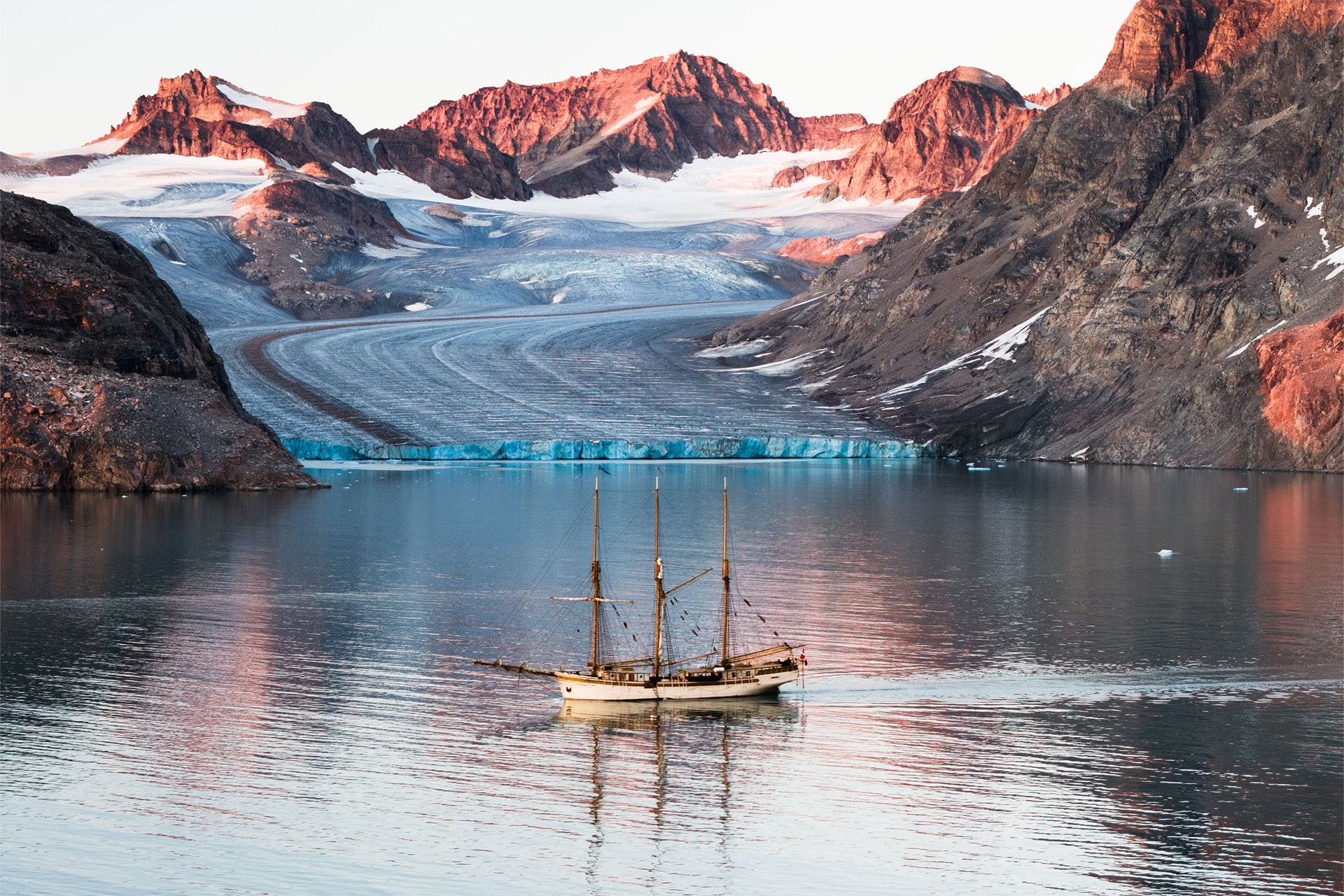
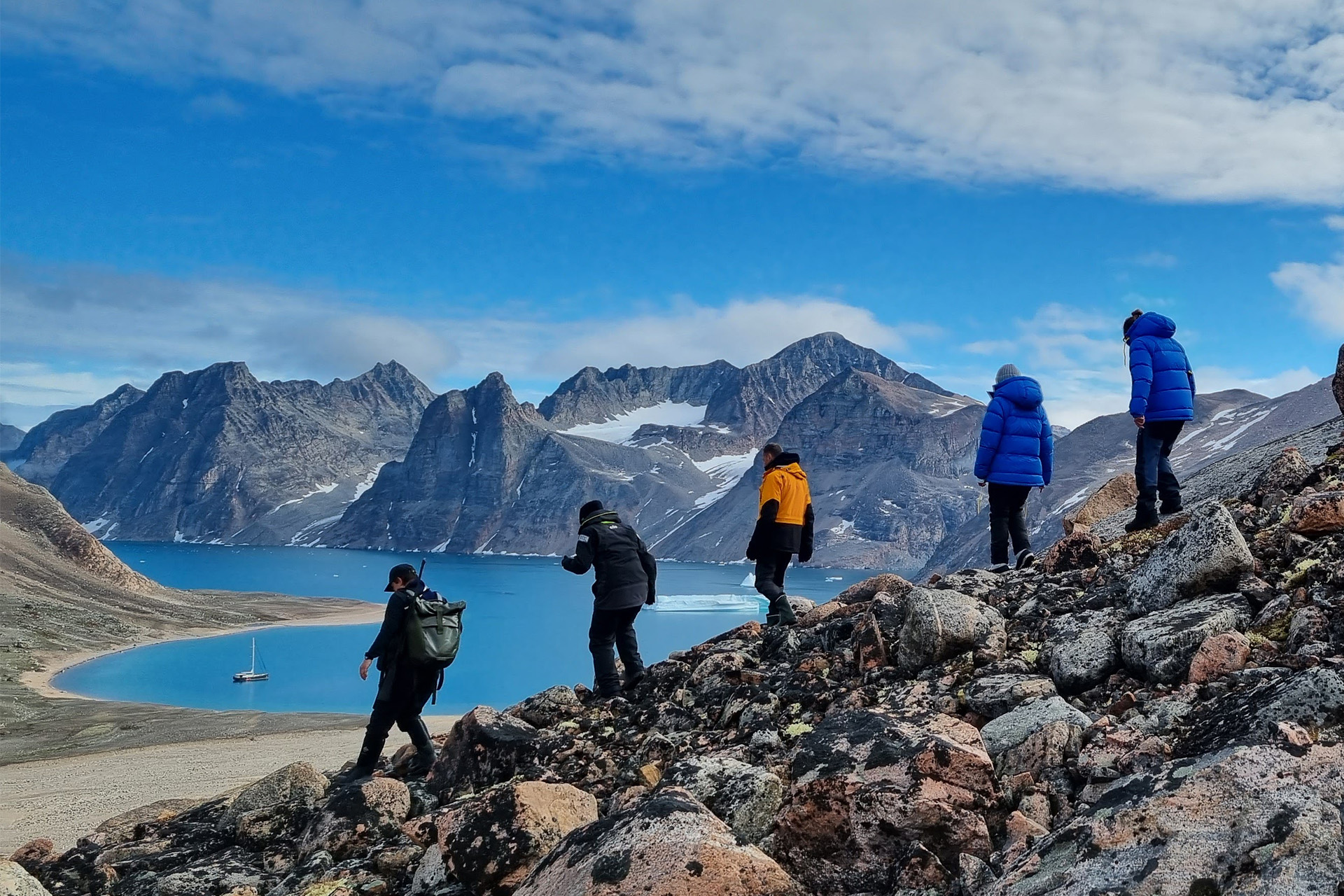
A smaller sailing vessel can reach places that no cruise ship or charter flight ever could. Deep into fjord systems where the water narrows, and the glacier walls close in on either side. Quiet anchorages beside red sandstone beaches. Remote island communities that see only a handful of visitors each year. The boat becomes your base, your transport and your home, moving at a pace that suits the place, guided by the wind, the ice and the light.
And you don’t need any sailing experience to join. Our expeditions are fully crewed by experienced skippers and expedition leaders who handle the navigation and safety throughout. That said, getting involved is very much encouraged. Learning to hoist a sail, take the helm or read a chart in these waters is an experience unlike any other, and for those who prefer to watch the scenery drift by from the deck, that is equally welcome. With engines off in the fjords, the silence is disrupted only by the cries of seabirds together with the distant crack of shifting ice. It is, quite simply, like nowhere else on earth.
When to visit Greenland?
Greenland’s sailing season runs from roughly late May to September, with the peak months being June, July and August. During this time, the weather is as settled as the Arctic allows, sea ice on the west coast is at its minimum and wildlife activity is at its height.
From late May to late July, the midnight sun means the sun doesn’t set at all, remaining visible twenty-four hours a day. Disorientating at first, it quickly becomes one of the most memorable aspects of sailing here, with long golden evenings on deck and the opportunity to explore at any hour. By August and into September, the light softens, and the first hints of autumn colour appear on the tundra. Whale activity remains strong, and the fjords can be quieter. For those heading to the Arctic north, later summer departures often offer the best ice conditions in Disko Bay.
Temperatures during the sailing season typically range from around 5 to 15 degrees Celsius on the west coast, with the east coast cooler and more variable. Conditions can change quickly, and layers are essential at all times. Wind, rain and sunshine can all arrive within the same afternoon, so pack for fast-changing weather.
South Greenland: Fjords, Viking History and Wild Coastline
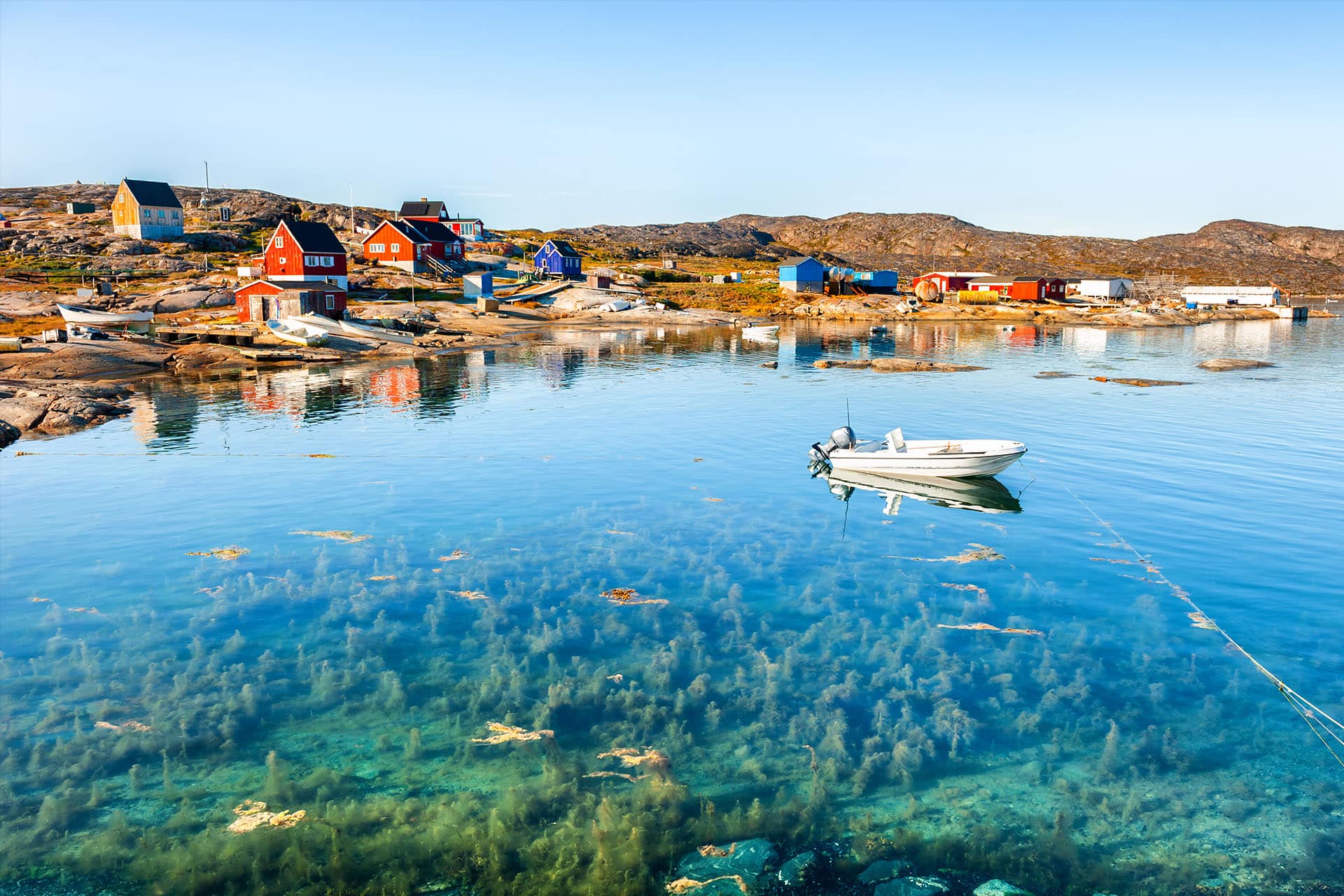
South Greenland is many people’s introduction to the country, and it rarely disappoints. This is one of the most dramatic coastlines on earth, where massive granite walls tower above deep fjords, glaciers reach the sea, and icebergs drift silently past. There are no roads, no cars and very few people. The hiking ashore is outstanding, the wildlife plentiful and the sense of space immense.
The fjords of the south are remarkable in their variety. Tasermiut Fjord, often referred to as the Arctic Patagonia, stretches 70 kilometres inland, flanked by granite peaks rising to over 2,000 metres. On calm days, the water sits mirror-flat, reflecting the cathedral walls above. The nearby Qinngua Valley holds one of the only natural stands of trees in all of Greenland, birch growing in a landscape otherwise defined entirely by rock, ice and open tundra. And after days of glacier walking and fjord sailing, the natural hot springs of Uunartoq offer one of the more surreal pleasures of any Greenland voyage: a warm soak in open water, surrounded by snow-capped mountains and drifting ice.
The West Coast: Nuuk, Communities and Open Water Sailing
Greenland’s west coast is warmer and more accessible than the east coast, relatively free of pack ice in summer, and home to most of the country’s population.
Nuuk, the capital, is a fascinating place to begin any Greenland expedition. The National Museum is well worth a visit, with collections spanning some remarkably preserved Norse artefacts. From Nuuk, the route north takes in a coastline of rocky peaks, deep fjords and small communities that offer a genuine insight into Greenlandic life. If you’re researching your trip, many Greenland travel guides recommend starting your journey here.
Paamiut, south of Nuuk, is a small town shaped by centuries of whaling and trade, and home to one of Greenland’s largest populations of white-tailed sea eagles. Further north, the landscape becomes increasingly dramatic. Maniitsoq sits among jagged peaks and a maze of islands, and the detour into Eternity Fjord is one of the highlights of any west coast voyage, with glaciers spilling down steep mountainsides into still water on a scale that is genuinely difficult to prepare for. The waters along this stretch are among the most productive in the North Atlantic, with humpback, minke and fin whales feeding along the coastal banks and harbour seals a near-constant presence.
Disko Bay and the Ice of Ilulissat
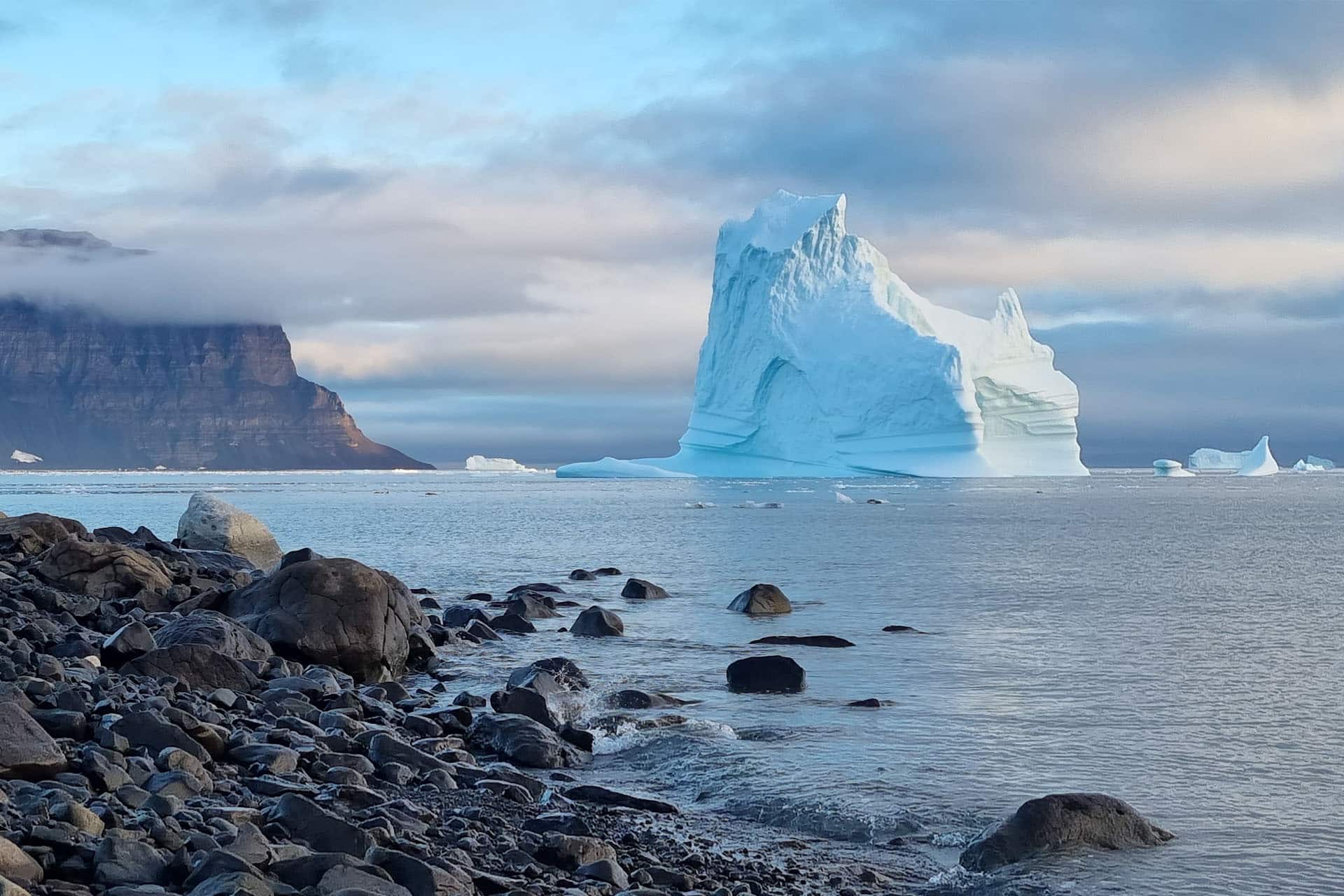
Nothing quite prepares you for Disko Bay. As the bay opens up on the approach from the south, the icebergs begin to appear: first one or two on the horizon, then more, until suddenly they are everywhere. Vast, sculptural, impossibly blue at their waterline, drifting in slow procession out of the Ilulissat Icefjord. The Sermeq Kujalleq glacier, one of the most productive glaciers in the Northern Hemisphere, calves an estimated 46 cubic kilometres of ice into the fjord each year.
Before reaching Ilulissat, Disko Island is a worthy stop. Its volcanic landscape sets it apart from the rest of the Greenlandic coast, and the tundra here is home to birdlife, Arctic hare and reindeer. The town of Qeqertarsuaq has welcomed generations of polar explorers, including Roald Amundsen, on expeditions heading further north. A hike up to the glacier above town is rewarded with sweeping views across a bay filled with drifting ice. Ilulissat itself is a lively, walkable Arctic town of around 5,000 people, and the UNESCO-listed Icefjord is right on its doorstep. On calm evenings, sitting on deck with a coffee as icebergs the size of tower blocks drift silently past, it is easy to understand why people return to Greenland again and again.
East Greenland: Scoresbysund and the World’s Largest Fjord System
The east coast of Greenland is wilder, more remote, and considerably less visited than the west coast. It is also, for many, the most extraordinary stretch of coastline anywhere in the Arctic.
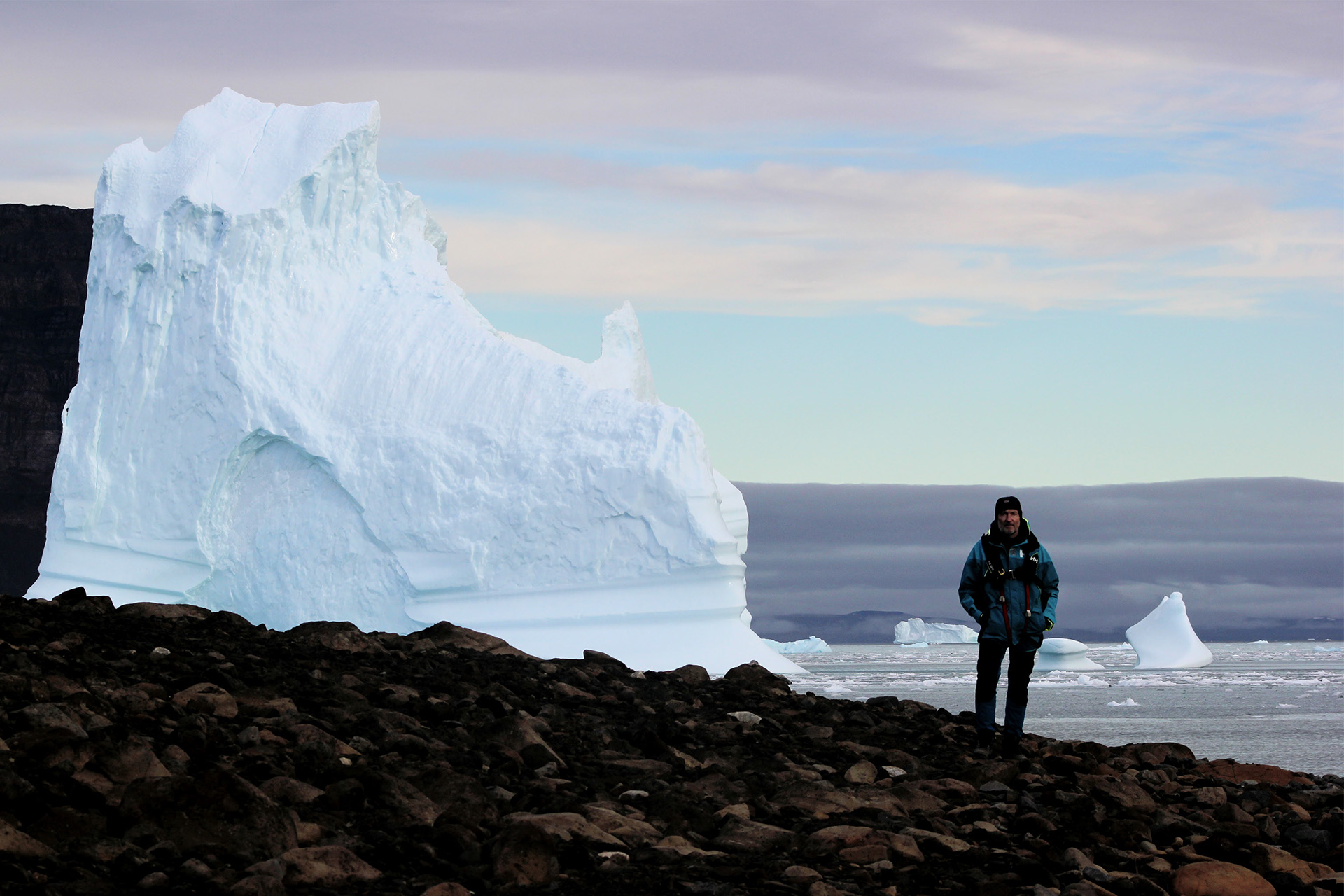
Scoresbysund is its centrepiece. The world’s largest fjord system stretches some 350 kilometres inland through a landscape of ancient rock and peaks that rise straight from the water. Drifting ice fills the outer waters, icebergs calve from glaciers that have been retreating for centuries, and the scale of it, once you are sitting in a tender alongside a berg the size of a building, is genuinely hard to put into words.
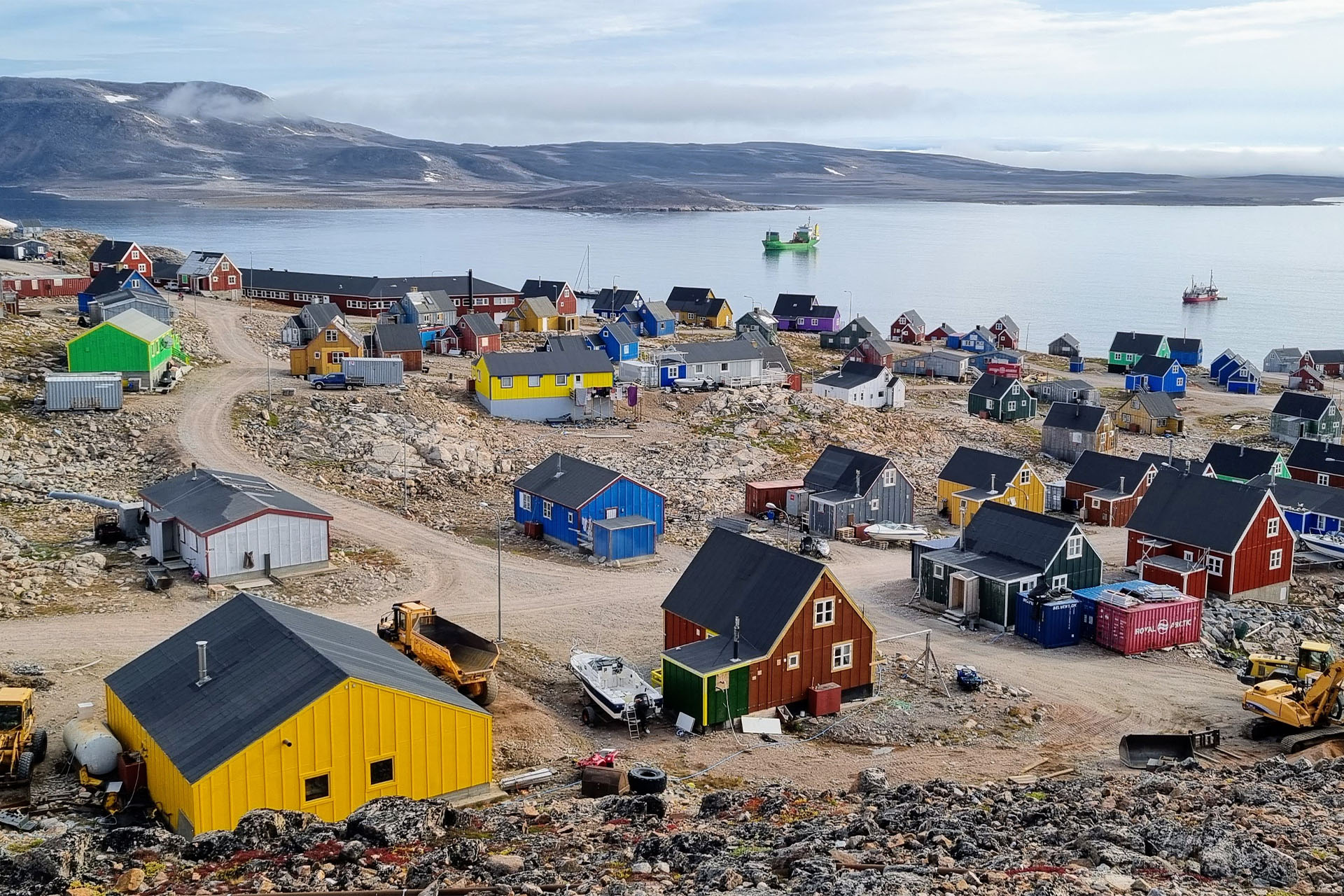
Ittoqqortoormiit, sitting at the mouth of the fjord system where it meets the open sea, is one of the most isolated settlements in the world, home to around 350 people who rely on hunting and fishing to sustain a way of life that has changed little over generations. The largest settlement in East Greenland, Tasiilaq, provides a fitting place to conclude an east coast Greenland expedition.
Wildlife in Greenland
Wildlife encounters are one of the defining features of any Greenland expedition, and the range of species on offer is genuinely remarkable. The seas around Greenland are rich in plankton and support over 15 different whale species throughout the year. Humpback, minke, and fin whales are regularly seen feeding along the coastal banks; beluga whales appear in select fjords; and, with patience and a little luck, narwhals can occasionally be spotted in the northern waters. Sperm whales and pilot whales are increasingly present in the south.
On land and ice, polar bears, Arctic foxes, walruses, caribou and herds of musk ox are regular spots against jaw-dropping scenery. Seabirds are a near-constant companion throughout: Arctic terns, guillemots, kittiwakes, little auks and white-tailed sea eagles all feature regularly. Home to the world’s largest national park, Greenland’s wildlife is as varied as its landscape.
Life on Board a Greenland Expedition
Our Greenland sailing expeditions are led by experienced skippers and expedition leaders who know these waters intimately. Small group sizes, typically between eight and twelve guests, mean the atmosphere on board is sociable and personal, and the crew are on hand to guide, teach and share their knowledge of the wildlife, geology and history you encounter along the way.
Days follow a natural rhythm shaped by the weather and the ice. Mornings often begin early, taking advantage of calm conditions to sail or explore by tender. Afternoons are spent ashore hiking, wildlife watching, or simply taking in the scale of where you are. Evenings on deck, with the midnight sun on the horizon and an iceberg drifting past, are the moments that tend to stay with guests longest.
All meals are prepared on board by the crew, using fresh and local produce wherever possible. Full board is included across all our Greenland voyages, and the combination of fresh sea air, physical days ashore and good company around the table makes for a genuinely restorative experience.
For those who want to get hands-on with sailing, there is always the opportunity to take the helm, help hoist the sails or join the navigation watch. For those who prefer to leave that to the crew, that is equally welcome. What matters is that you arrive curious and leave with a lasting sense of having experienced something genuinely extraordinary.
Ready to Explore Greenland?
Whether you are drawn by the ice, the wildlife, the history or simply the desire to experience one of the last true wildernesses on the planet, a sailing expedition to Greenland is unlike anything else we offer. Browse our Greenland sailing holidays to find the right voyage for you, or get in touch with the team to talk through your options.